In today’s digital landscape, where every notification and post vies for attention, forging deep connections can feel like searching for a needle in a haystack. Community circles offer a fresh approach: intimate gatherings of 5 to 15 individuals who share interests, goals, or challenges. By limiting size, these circles enable more attentive listening, personal storytelling, and collective problem solving. As organizations and leaders currently seek ways to nurture authentic relationships, employing community circles can transform passive spectators into active contributors and champions.
This year (2026), the shift toward quality interactions has never been more urgent. Rather than broad forums where comments disappear in a flood of content, focused small groups foster trust, drive targeted outcomes, and celebrate diverse voices. In this comprehensive guide, you’ll discover how to define your circle’s purpose, structure meetings, facilitate engaging dialogue, harness technology, and measure success. Whether you’re launching a product feedback group, peer support cohort, or a learning workshop, mastering community circles can elevate your engagement strategy. With insights drawn from research institutions and real-world applications, this article will equip you to build dynamic circles that thrive. Read on to explore proven practices, practical tools, and inspiring examples that will help you cultivate meaningful community circles and spark lasting momentum.
Understanding Community Circles
Community circles are intentionally small gatherings that bring together a limited number of participants—typically between 5 and 15—to delve deeply into shared interests or objectives. Unlike sprawling online forums where thousands of posts can bury insights, these microgroups prioritize quality over quantity. By operating in an intimate setting, community circles reduce background noise and create space for every voice to be heard. In today’s environment, where attention spans are fragmented and superficial scrolling dominates, this focused model fosters an environment where members feel both valued and motivated to contribute.
At their core, community circles revolve around a defined theme or purpose. Some groups may form to offer product feedback, collaborating on prototypes and user experiences, while others focus on peer mentoring, skill development, or well-being check-ins. For instance, a professional development circle might meet weekly to exchange career advice, while a local neighborhood circle could convene monthly to address community concerns. The central idea is to cultivate intentional dialogue and mutual support among participants who share a common thread, whether that be a hobby, professional role, or social goal.
One of the defining characteristics of community circles is their adaptability. These groups can convene virtually via video conferencing or reside in physical spaces when face-to-face interaction is possible. This flexibility accommodates diverse preferences and geographical barriers, making circles a versatile tool for global teams or niche local communities alike. The choice of format—live chat threads, scheduled calls, or hybrid models—depends on the group’s needs and the technology at hand.
Community circles also hinge on clear expectations and structured practices. From establishing membership criteria to setting meeting cadences, each element contributes to a circle’s health and momentum. In fact, research highlighted by the National Science Foundation underscores the importance of group size and regular interaction for sustaining engagement levels in collaborative settings. By understanding these core principles, leaders and organizers can lay a solid foundation for circles that endure and evolve over time.
Psychologically, community circles tap into humans’ innate preference for small-group settings, where personal trust and accountability flourish. Scholars at the National Science Foundation have found that interactions within groups of fewer than 15 participants yield higher satisfaction ratings and stronger collaborative bonds than those in larger assemblies. This dynamic encourages members to invest time and effort, knowing that their contributions directly impact outcomes and are acknowledged by peers. As you begin to explore community circles, appreciating these psychological underpinnings will guide you in crafting environments where genuine connections can thrive.
Unlocking the Benefits of Small-Group Engagement
One of the most significant advantages of community circles lies in the trust and safety they foster. When participants gather in groups of manageable size, repeated interactions build a sense of psychological security that encourages honest sharing. Instead of guarded or superficial comments typical in large public forums, members feel comfortable disclosing insights, challenges, and creative ideas. This trust-based atmosphere not only deepens relationships but also enhances the quality of feedback and brainstorming outcomes.
Small-group settings excel at driving focused results. With a narrow agenda and a limited number of contributors, circles can pinpoint specific issues, generate targeted solutions, and set clear action steps. Whether the goal is refining a product feature, designing a training curriculum, or coordinating a local volunteer effort, community circles keep discussions on track. By assigning meeting objectives and time-bound milestones, these groups transform abstract goals into concrete outcomes more efficiently than broad, open-ended networks.
Community circles also level the playing field for members with varying personalities. In large-scale discussions, dominant voices often overshadow quieter participants, but small circles enforce structured turn-taking that amplifies less outspoken insights. Facilitated speaking rounds, anonymous feedback channels, or written prompts ensure that everyone has an equal opportunity to contribute. This inclusive approach unlocks diverse perspectives, enriching the collective understanding and preventing echo chambers.
Another benefit is the formation of deeper interpersonal bonds. Repeated interactions in a close-knit environment foster camaraderie, which often translates into higher member retention, word-of-mouth advocacy, and volunteer engagement. Participants who feel genuinely connected to their circle are more likely to return, recommend the group to peers, and assume leadership roles over time. These ripple effects can fortify a broader community network, as enthusiastic circle members become ambassadors who attract new participants.
Moreover, data-driven studies support the impact of small-group collaboration on both satisfaction and productivity. Research conducted by institutions like the United Nations indicates higher retention rates among community members who participate in regular circle meetings compared to those who only engage in general forums. Such findings underscore the transformative potential of community circles for organizations aiming to nurture meaningful dialogue and sustainable engagement.
Finally, community circles encourage co-creation and shared ownership. When members actively collaborate to shape agendas, resources, or community initiatives, they develop a sense of collective identification with the group’s mission. This shared responsibility often leads to innovative projects and sustained momentum, as participants invest in both the process and the outcomes. By leveraging the power of small-group dynamics, organizations can ignite creativity and build resilient networks that evolve organically over time.
Structuring Effective Community Circles
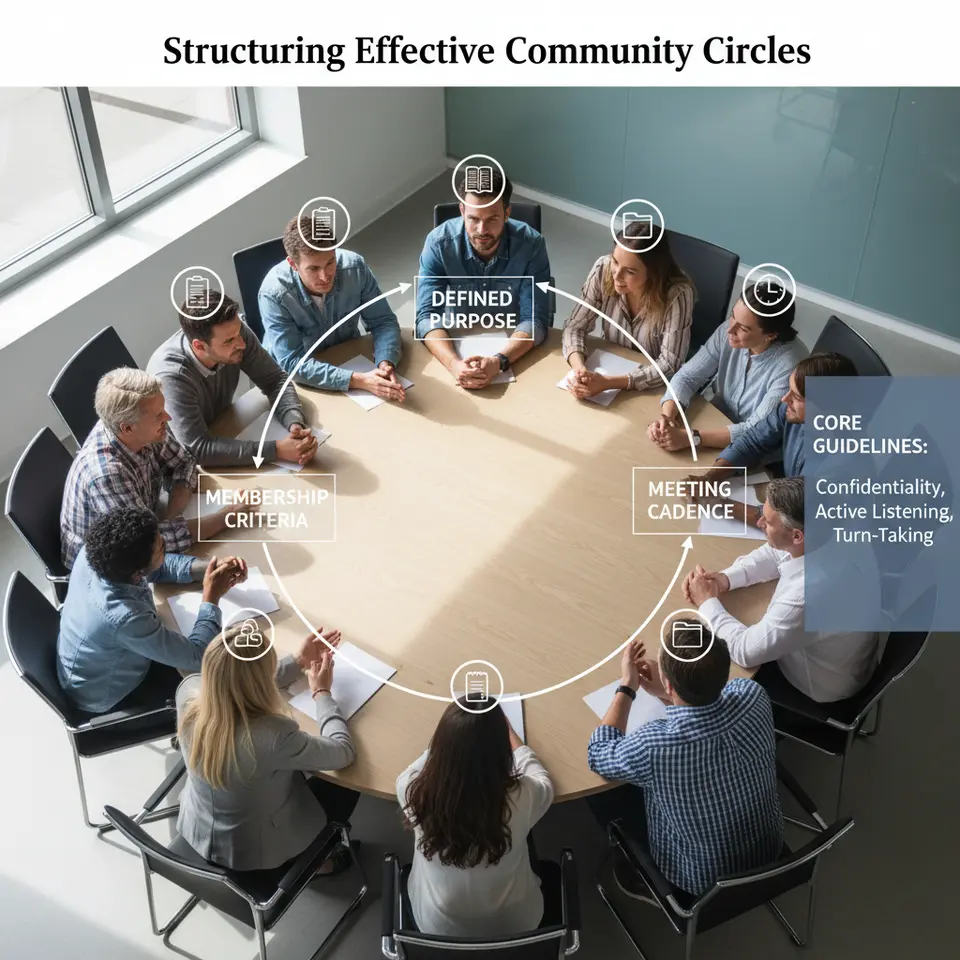
Establishing a clear purpose is the cornerstone of a successful community circle. Begin by articulating what the group aims to achieve—be it generating feedback, facilitating peer mentorship, or fostering personal growth. A well-defined scope helps members understand the objectives, prepare for meetings, and commit their time effectively. Clear purpose statements act as a north star, guiding discussions and ensuring that every session delivers tangible value for participants and organizers alike.
Membership criteria are equally vital to crafting a balanced group dynamic. Decide who should join based on factors like expertise, tenure, demographic diversity, or shared interests. In some circles, inviting both newcomers and veterans can promote mentoring relationships, whereas other groups may benefit from drawing exclusively on power users or specialists. By selecting participants thoughtfully, you can improve the relevance of discussions and maintain an equitable mix of perspectives.
Next, determine the format and meeting cadence that will best serve your circle’s objectives. Synchronous video calls offer real-time interaction and richer communication through visual cues, while asynchronous chat threads allow for flexible contributions across time zones. Hybrid formats can blend both approaches, enabling live brainstorming followed by ongoing discussions. Consistency is critical: whether you meet weekly, biweekly, or monthly, a regular schedule fosters momentum and signals to members that their engagement is valued.
Assigning roles within the circle reinforces accountability and operational efficiency. Typical roles include a facilitator to guide discussions, a note-taker to capture essential insights, and a timekeeper to manage the agenda. Some groups also designate a resource curator to gather and share relevant materials. By rotating these responsibilities regularly, you can empower members to develop leadership skills and ensure that no single individual becomes overwhelmed.
Finally, codify guidelines to create a respectful, productive environment. Establish norms around confidentiality, active listening, and turn-taking to protect psychological safety. Clarify expectations for attendance, participation, and follow-up actions. Documenting these agreements in a shared space—such as a collaborative document—helps new and existing members reference them easily. Consistent application of agreed-upon rules fosters trust and reinforces the circle’s commitment to mutual respect and shared success.
Regularly revisiting and refining these elements ensures that your community circles adapt to evolving needs. Soliciting feedback on the structure, membership, and meeting format can reveal areas for improvement. By treating your circle as a living system and iterating based on member insights, you guarantee continued relevance and engagement over time.
Facilitating Impactful Dialogue

Effective facilitation is the engine that drives impactful community circles. Starting each session with a quick check-in round invites participants to share a brief personal update or mood indicator. This simple ritual warms up the group, aligns everyone’s focus, and surfaces any pressing concerns. By acknowledging individual experiences, facilitators cultivate an atmosphere of empathy and authenticity, setting the tone for more meaningful exchanges throughout the meeting.
Structured brainwriting is another powerful technique to foster diverse input. Instead of inviting spontaneous discussion, give members two to three minutes to jot down ideas individually. After the writing phase, circulate contributions in a round-robin manner. This approach mitigates groupthink, prevents dominant personalities from monopolizing the conversation, and encourages all participants to articulate their perspectives without immediate critique.
Active listening prompts are essential for deepening understanding. Encourage members to paraphrase what they’ve heard by asking questions like, “Can you rephrase that in your own words?” or “What key points did I hear you emphasize?” Such prompts not only confirm accurate comprehension but also demonstrate respect for each speaker’s viewpoint. Over time, this practice builds empathy and strengthens collaborative dynamics within the circle.
Fist-to-five voting is a lightweight consensus-building tool that quickly reveals group sentiment. Participants rate their support for an idea by showing zero to five fingers—zero indicating no agreement and five signaling full endorsement. This visible, nonverbal method allows facilitators to gauge the room’s temperature, identify areas of hesitation, and prioritize actions democratically, all within a matter of seconds.
Capturing action items at the close of each session ensures that insights translate into tangible progress. Facilitate a final round where members propose next steps, assign clear owners, and establish deadlines. Document these commitments in a shared repository and review them at the start of subsequent meetings. This accountability loop sustains momentum and reinforces the circle’s purpose-driven culture.
To further boost engagement, consider integrating brief silent reflection or gratitude rounds. Inviting participants to note personal takeaways or express appreciation can enhance emotional connection and reinforce positive behaviors. By combining structured formats, thoughtful listening, and clear follow-up mechanisms, facilitators can transform ordinary group conversations into catalysts for sustained collaboration and growth.
Leveraging Technology to Power Community Circles
In today’s interconnected world, the right technological ecosystem can elevate community circles from informal gatherings to structured, scalable networks. By integrating purpose-built platforms and tools, organizers ensure that critical insights are preserved and easily accessible. Whether your circle operates remotely or meets in person, technology can streamline coordination, enhance collaboration, and maintain institutional memory across sessions.
Video conferencing solutions like Zoom, Microsoft Teams, and Google Meet facilitate live discussions with features such as breakout rooms, screen sharing, and recording options. These capabilities are invaluable for circles that rely on real-time interaction and visual collaboration. Recordings of sessions can be archived for members who miss meetings or referred to for post-session analysis. For organizations with stringent security requirements, platforms accredited by standards such as SOC 2 or FedRAMP offer additional assurances.
Dedicated community hubs, including Circle.so, Mighty Networks, and Discourse, allow hosts to segment groups, create threaded discussions, and store resource libraries. Many universities, such as those listed by Harvard University, emphasize the benefits of specialized social platforms for learning communities. These hubs enable members to engage asynchronously in topic-specific channels, making it easier to recharge the circle’s momentum between scheduled meetings.
Collaborative document environments—Google Workspace, Notion, and Confluence—serve as centralized repositories for agendas, notes, and action-item registries. Real-time co-editing ensures that all members can contribute to and refine documents simultaneously. Version history and permission settings help maintain the integrity of shared content while giving circle leads the flexibility to grant editing rights based on roles.
For real-time input and decision-making, polling tools like Mentimeter, Slido, and built-in community platform surveys provide interactive ways to rank ideas and gauge sentiment. Facilitators can use live word clouds, multiple-choice polls, or rating scales to involve participants actively. These instant feedback loops not only keep engagement levels high but also supply quantitative data that can inform strategic decisions and demonstrate impact to stakeholders.
Finally, automation services such as Zapier, Slack workflows, and automated email sequences simplify logistical tasks. By scheduling reminder messages, distributing pre-meeting materials, and collecting post-session surveys automatically, circles minimize administrative overhead. Automated follow-ups encourage accountability and ensure that no action item slips through the cracks. When combined thoughtfully, these tools create a cohesive infrastructure that supports the long-term vitality of your community circles.
Frequently Asked Questions
What is the ideal size for a community circle?
The optimal size for a community circle ranges from 5 to 15 members. This small-group format ensures everyone has an opportunity to speak, fosters trust, and maintains a focused discussion environment.
How often should community circles meet?
Meeting cadence depends on goals and availability—weekly or biweekly sessions are common for active projects, while monthly check-ins suit long-term peer support or special interest groups. Consistency is key to sustaining engagement.
Can community circles be both virtual and in-person?
Yes. Circles can operate fully online via video conferencing and chat platforms, in-person in a dedicated space, or as a hybrid of both. Choose the format that best fits participants’ needs and geographical distribution.
How do I handle dominant or quiet participants?
Use structured turn-taking techniques like round-robin speaking, brainwriting, or anonymous feedback prompts. Assign a facilitator to ensure equitable participation and maintain a balanced dialogue.
What metrics indicate circle success?
Track participation rates, member retention, number of action items completed, and qualitative sentiment through surveys. These metrics help assess engagement, productivity, and overall satisfaction.
Conclusion
In 2026, as digital spaces become increasingly crowded, community circles stand out as a powerful strategy for cultivating authentic connections and sustained engagement. By limiting group size and focusing on shared objectives, these intimate gatherings create an environment where trust flourishes, diverse voices are heard, and tangible results emerge. Introducing clear structures—from purpose definitions and membership criteria to facilitation roles and guidelines—lays the groundwork for circles that remain vibrant and productive over time.
Embracing proven facilitation techniques, such as check-in rounds, structured brainwriting, and consensus-building votes, further deepens dialogue and ensures equitable participation. Leveraging modern technology—video conferencing solutions, dedicated community platforms, collaborative documents, polling tools, and automation services—provides the operational backbone needed to scale and sustain circles across any organization or network.
Measuring success through metrics like participation rates, implementation of circle-driven ideas, and sentiment scores helps refine the process and demonstrate impact. By starting small, iterating based on feedback, and honoring the principles of inclusivity and accountability, you can transform passive audiences into engaged collaborators. As you launch your own community circles today, remember that their true power lies in the human connections they nurture and the collective achievements they unlock.
Ready to harness the full potential of small-group dynamics? Initiate your first community circle this year (2026), invite participants with clear guidance, and set your agenda. The ripple effects of deeper engagement and collaborative innovation await your leadership.