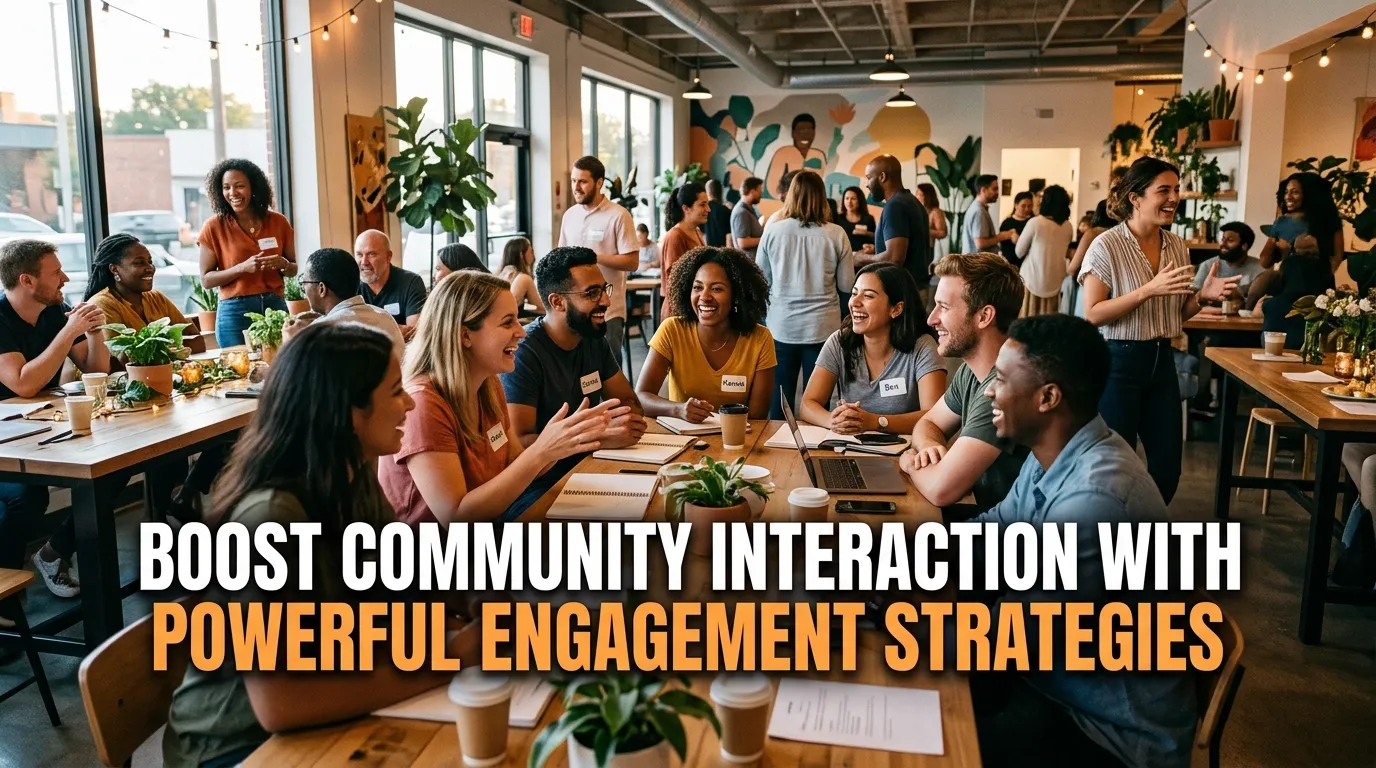
Are you struggling to build an active audience? Boosting community interaction is the ultimate key to fostering loyalty, driving growth, and creating lasting connections with your members.
This comprehensive guide explores actionable strategies to elevate your platform. You will discover practical engagement tactics, psychological drivers, expert tips, and common pitfalls to avoid. By implementing these proven methods, you can transform a quiet audience into a thriving, highly engaged ecosystem that practically runs itself.
The Foundations of a Thriving Digital Space
Building a space where people actively want to spend their time requires far more than just inviting them to a platform and hoping for the best. It demands a deep understanding of human psychology, value exchange, and clear, transparent communication. When you intentionally prioritize community interaction, you create a powerful, self-sustaining ecosystem where members feel genuinely valued, explicitly heard, and highly motivated to contribute their unique perspectives.
Why Engagement Matters More Than Ever Before
In an era of endless digital noise, capturing user attention is exceedingly difficult. Retaining that attention over months and years is even harder. High levels of community interaction signal to your members that your platform is a vibrant, worthwhile place to invest their most precious resource: their time. This ongoing interaction drives organic growth through powerful word-of-mouth recommendations and consistent user-generated content. Consequently, you will significantly reduce your traditional marketing costs while simultaneously building robust, unshakable brand loyalty among your core user base.
Defining Your Core Purpose and Vision
Before you can successfully implement any advanced strategies, you must clearly define the core purpose of your group. Members need a reason to stay. Ask yourself these critical questions:
- What specific, tangible problem does this group solve for its members?
- How can members directly benefit from talking to one another rather than just consuming content?
- What unique, irreplaceable value do we provide that they simply cannot find anywhere else on the internet?
When your fundamental purpose is crystal clear, community interaction flows much more naturally. Members will understand exactly why they are there, what is expected of them, and how they can contribute meaningfully to the overarching goals of the collective group.
Psychological Drivers Behind Member Participation
 To truly unlock high levels of community interaction, you must understand the psychological triggers that prompt a user to hit the “reply” button or share a post. People do not engage simply because a platform exists; they engage because an underlying psychological need is being met.
The Need for Belonging and Identity
Humans are inherently social creatures wired for connection. We actively seek out groups that align with our personal identities and core beliefs. When a member joins your platform, they are looking for a tribe. By validating their experiences and encouraging them to share their stories, you tap into the powerful psychological desire for belonging. This drives long-term member retention because leaving the platform would mean leaving a part of their identity behind.
The Drive for Status and Recognition
We all crave acknowledgment for our contributions. Whether it is a thoughtful answer to a difficult question or a simple word of encouragement, recognizing members for their efforts satisfies their drive for status. This is why gamification and reward systems are so profoundly effective in boosting community interaction. When users know their efforts will be publicly celebrated, they are far more likely to engage consistently.
Strategic Onboarding: Setting the Stage for Success
The absolute most critical window for determining a user’s long-term value is their first 48 hours inside your platform. If they join, look around, and hear only crickets, they will likely log out and never return.
Crafting the Perfect Welcome Experience
Personalization is the key to early audience building. Automated emails are fine for logistics, but a genuine human connection requires a personal touch.
- Send a personalized direct message welcoming them by name.
- Tag them in a highly relevant discussion thread based on the interests they selected during sign-up.
- Ask them to formally introduce themselves, but give them a specific prompt (e.g., “What is the biggest challenge you are facing this week?”) rather than a generic “tell us about yourself.”
Creating Quick Wins
New members need to feel successful immediately. Guide them to a quick win, such as filling out their profile completely, commenting on a specific pinned post, or completing a beginner’s module. These small dopamine hits early in the onboarding process build the behavioral momentum necessary for sustained community interaction over the long term.
Expert Insights: The Secret to Long-Term Retention
 Building initial momentum is one thing; sustaining that energy over the years is an entirely different challenge. We have gathered extensive insights from top-tier managers specializing in community management on how to keep the fire burning.
Empower and Elevate Your Superusers
Every single group, regardless of size, has a small percentage of hyperactive members. Instead of taking these passionate advocates for granted, you must intentionally empower them. Create a private, exclusive sub-group specifically for these superusers. Allow them to beta-test new platform features, provide raw feedback on group rules, and actively help moderate public discussions. When you elevate these members to a status of quasi-leadership, they become your most passionate evangelists, organically driving community interaction on your behalf while you sleep.
Foster Peer-to-Peer Mentorship
Do not position yourself or your brand as the single source of truth. The most resilient groups are those where members actively help one another. Create dedicated spaces where seasoned veterans can mentor newcomers. This drastically reduces the burden on your official support team and fosters incredibly deep interpersonal bonds between users.
Comparison Table: Passive vs. Active Management Approaches
|
Feature |
Passive Management |
Active Management |
Impact on Community Interaction |
|---|---|---|---|
|
User Onboarding |
Generic automated welcome email |
Personalized direct messages, specific thread tags |
Immensely High; members feel instantly valued and seen |
|
Content Strategy |
Broadcasting links, company news, and articles |
Asking open-ended questions, hosting live polls, and sharing raw thoughts |
Very High; sparks immediate, organic conversations |
|
Group Moderation |
Only logging in to delete spam or ban obvious trolls |
Highlighting great posts, rewarding users, guiding debates |
Extremely High; encourages high-quality, thoughtful contributions |
|
Member Feedback |
Passively waiting for support tickets and complaints |
Actively sending out surveys, hosting town halls |
Medium to High; prevents hidden churn and builds immense trust |
|
Conflict Resolution |
Ignoring minor arguments until they explode |
Stepping in early to mediate, turning conflict into constructive debate |
High; maintains a safe, productive digital community |
Common Mistakes to Avoid at All Costs
Even highly seasoned leaders make critical missteps that can instantly stifle community interaction. Be certain to avoid these incredibly common pitfalls if you want your platform to survive and thrive.
- Talking At, Not With: If your platform feels like a massive corporate megaphone for your brand rather than a genuine two-way street, members will quickly disengage. You must listen just as much as you speak.
- Severe Over-Moderation: While rules and boundaries are undeniably necessary for safety, deleting every slightly off-topic post creates a sterile, deeply unnatural environment. You must allow for natural, organic conversations to flow, even if they drift slightly from the main topic.
- Brutal Inconsistency: Disappearing for three weeks because you are busy, and then suddenly flooding the feed with ten posts in a single day, heavily confuses the platform algorithm and frustrates your members. You must maintain a steady, highly predictable presence.
Pro Tips for Managing Rapid Growth
As your platform successfully scales, maintaining incredibly high levels of community interaction becomes a highly complex logistical challenge. Here are several advanced pro tips to manage massive growth effectively without losing the intimate feel your members love.
Implement Exceptionally Clear Guidelines Early
Do not wait until a crisis occurs to figure out your rules. Set the tone explicitly from day one. Clearly and publicly state exactly what behaviors are wildly encouraged and what actions will absolutely not be tolerated under any circumstances. This proactive approach prevents toxic behavior from ever taking root and permanently scares away internet trolls, ultimately creating a highly safe, productive space for genuine interaction to flourish.
Utilize Granular Sub-Groups and Niche Channels
As a main group grows into the thousands, the primary feed can quickly become an overwhelming firehose of disjointed information. To combat this, intentionally create highly dedicated spaces for specific hyper-niche interests, local geographical locations, or varying career experience levels. Smaller, highly focused channels consistently boast substantially higher community interaction rates simply because the specific topics being discussed are hyper-relevant to absolutely everyone inside that specific room.
Analyzing Your Metrics for Continuous Improvement
 You absolutely cannot effectively improve what you do not rigorously measure. Regularly auditing your qualitative and quantitative metrics thoroughly ensures your complex strategies are actually generating a positive return on investment.
Key Performance Indicators (KPIs) You Must Track
To understand the true health of your platform, you need to look far beyond simple vanity metrics like total registered user count. Focus heavily on these deep engagement metrics:
- Daily and Weekly Active Member Percentage: Exactly what percentage of your total registered audience actually logs in, clicks, or engages every week? This is the truest measure of platform health.
- Average Time to First Response: How quickly does a brand-new question receive a helpful, accurate answer from either an official moderator or a knowledgeable peer? Speed here is vital.
- User-Generated Content Ratio: Are your members actively starting their own organic discussion threads, or are they exclusively reacting to the posts created by your internal team?
- Member Churn Rate: How many people are completely abandoning the platform each month, and more importantly, why are they leaving?
- Sentiment Analysis: Are the overall conversations highly positive, mildly neutral, or deeply negative? Tools can help scan for this, but nothing beats manual reading.
Frequently Asked Questions
1. What exactly is community interaction, and why is it so important?
Community interaction is the active exchange and engagement among members in a shared space. It builds trust, increases retention, and encourages organic growth through meaningful participation and ongoing discussions.
2. How can I accurately measure the true success of my engagement strategies?
Success in engagement strategies is measured through KPIs like active users, comments, retention rates, and user-generated content. These metrics reveal how effectively your community is participating and growing.
3. What are currently the absolute best software platforms for building an audience?
The best platforms depend on audience needs. Discord supports real-time chat, Discourse enables structured discussions, Slack fits professional networking, while Circle and Mighty Networks support courses and community building.
4. How do I successfully revive a completely dead or highly inactive group?
Reviving inactive groups requires auditing members, removing inactive accounts, launching engaging events like AMAs, and reactivating top users. Direct outreach and strong content can quickly spark renewed participation.
5. Should I genuinely use gamification tactics to boost engagement?
Gamification improves engagement by adding points, badges, and leaderboards. These elements motivate members through recognition and competition, increasing participation and long-term involvement in community activities.
6. Exactly how often should I post to properly maintain community interaction?
Posting 3 to 5 high-quality, discussion-focused posts weekly is ideal. Consistency and value matter more than frequency, encouraging organic conversations instead of overwhelming members with low-quality content.
7. What is the fundamental, day-to-day role of a community manager?
A community manager welcomes members, moderates discussions, enforces rules, resolves conflicts, and connects user needs with brand goals. They ensure a safe, engaging, and active community environment.
8. How do I effectively handle highly negative members or intentional internet trolls?
Negative users should be handled with clear rules, warnings, and strict enforcement. Minor issues need polite correction, while repeat offenders should be removed to maintain safety and positive engagement.
9. Can automated AI tools actually help with daily group management?
AI tools assist community management by automating moderation, welcome messages, spam filtering, and scheduling. This reduces workload and allows managers to focus on meaningful human interactions and strategy.